
Finding Elkhart County Residents
Choose the first record by what is already known. An address belongs in the Beacon property search. A party name tied to land belongs in the Recorder's Tapestry EON index. A court matter belongs in MyCase, and an older name may be easier to find through a printed city directory or obituary index. Each source has a limited job. An assessor record identifies the owner and tax mailing address, but it does not list every person in a household. A voter record reflects registration, not a complete household.
The best residents directory search uses two records that agree on a meaningful detail. Compare a parcel number, legal description, middle initial, case date, former address, or relative. Do not treat a same-name result as proof. Elkhart County also includes several cities and towns, so confirm whether the record belongs to the county, the City of Elkhart, Goshen, or another municipal office before requesting a copy.
- Search Beacon by owner, address, or parcel number, then save the parcel card.
- Check the official Indiana voter portal when registration status is relevant.
- Use Tapestry EON to match a grantor or grantee to a recorded land instrument.
- Search MyCase with name variants, dates, status, and the correct court.
- For older residents, use library directories, census schedules, newspapers, and microfilm.
Elkhart County Records Desks
Three Goshen offices supply much of the current Elkhart County residents directory trail. The Recorder keeps deeds, mortgages, liens, plats, and related instruments. The Assessor maintains parcel cards and the owner, address, and parcel search in Beacon. The Clerk handles court files, elections, voter registration, marriage records, divorce files, and probate. City records remain separate when a request concerns the City of Elkhart. For address-by-address work, continue with the Elkhart County street directory.
Beacon Starts an Address Search
Elkhart County moved its property and GIS work to Beacon in late 2024. The county's official guide documents owner, address, and parcel-number searches. An autocomplete result may open one parcel or a list of matches. The detail view links the map and a downloadable property record card. That card can show the parcel ID, situs address, separate owner mailing address, legal description, subdivision or lot, transfer data, assessed values, and building facts.
Situs means the physical location of the parcel. A mailing address is where the tax notice goes, and it may be elsewhere. Neither field proves who currently occupies the building. Save the parcel number and legal description before moving into Recorder records because those identifiers survive many street-label and ownership changes.
| Beacon search | Best use | Check next |
|---|---|---|
| Owner | Find parcels tied to a known name | Mailing and situs fields |
| Address | Identify a parcel at a known place | Parcel card and map |
| Parcel number | Open one stable property record | Legal description and transfers |
Open the official Beacon search before viewing the county interface shown below.
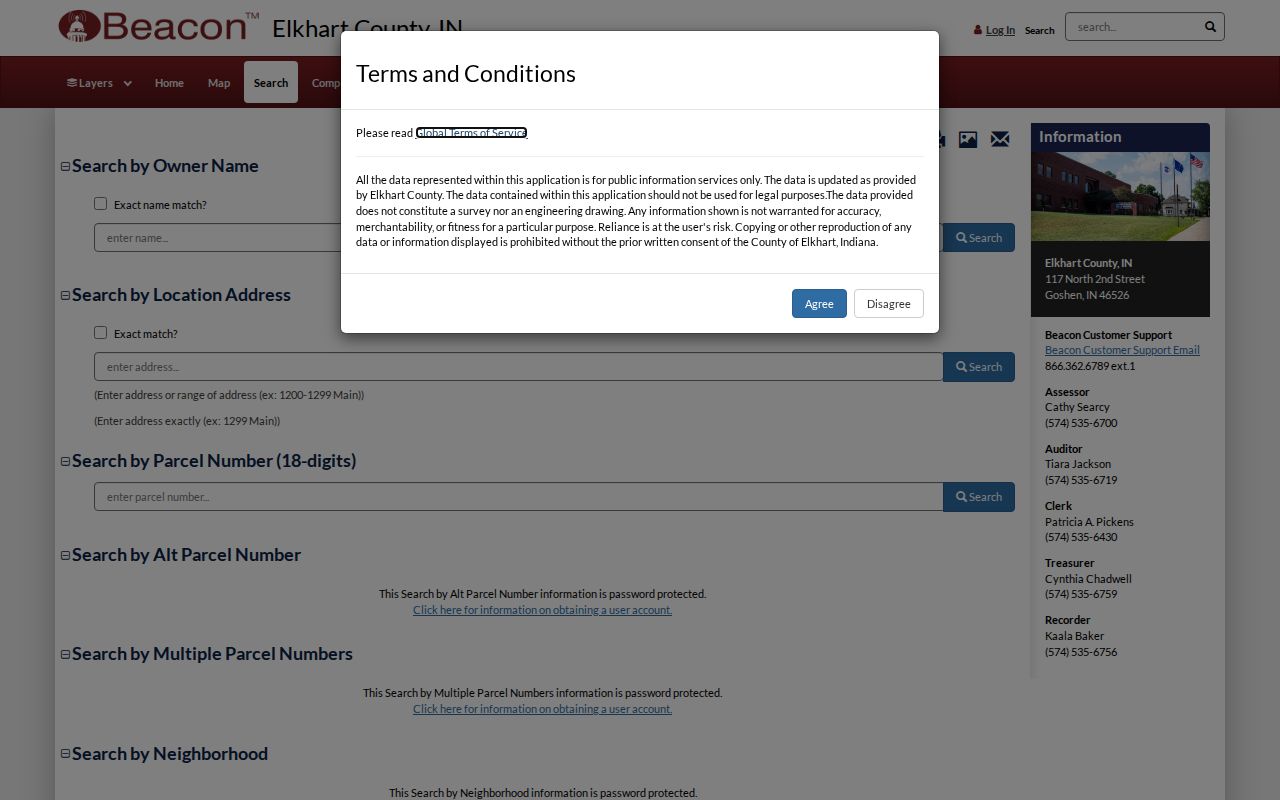
The search screen is the doorway to the parcel card, not a statement that the named owner lives at the property.
Recorder Names Follow the Deed
The Elkhart County Recorder preserves deeds, mortgages, releases, assignments, liens, affidavits, plats, and other recorded instruments. Tapestry EON searches a party as grantor, grantee, or both. A grantor transfers an interest; a grantee receives one. Results can include recording and document dates, instrument number and type, book and page, consideration, parcel or subdivision details, related documents, and an image link.
The online index's earliest Elkhart County year is not stated by an official source. Do not assume it reaches county formation. The Recorder offers public computers, while Laredo serves regular subscribers. Staff will provide a copy when recording details are known, but the office says employees do not conduct a requested name search. Older work moves to deed books and State Library microfilm.
- Index
- A finding list that points to a recorded document.
- Grantor
- The person or entity giving an interest.
- Grantee
- The person or entity receiving an interest.
- Certified copy
- An office-authenticated copy, available by request and fee.
Note: A deed proves a recorded property interest at a point in time, not every resident at that address.
Current Elkhart County Directories
No official source lists every resident. Current directory work instead compares public records created for separate government duties. Beacon identifies parcel owners. Indiana Voters handles individual registration and election information. Tapestry EON names parties to land instruments. MyCase publishes eligible court case data. The Health Department supplies restricted certificates only to qualified requesters. Each roll answers a different question and leaves out many people.
| Source | Who It Lists | Keeper | Access |
|---|---|---|---|
| Beacon property roll | Parcel owners | County Assessor | Free search |
| Indiana Voters | Registered voters | County Clerk and state | Individual lookup |
| Tapestry EON | Recorded instrument parties | County Recorder | Index and paid images |
| MyCase | Parties in eligible public cases | Indiana courts | Free public index |
| Vital records | Qualified birth or death subjects | County Health Department | Restricted request |
A one-name search should begin with the roll most likely to contain the person, then use a second source to separate namesakes. The Elkhart County resident lookup gives that person-focused sequence. Commercial listings can be stale or merged; official records are narrower but reveal their custodian, date, and correction route.
MyCase Needs a Second Match
Indiana MyCase searches public cases from Elkhart County Circuit, Superior, Juvenile, and city courts as permitted by court-access rules. Its Case, Name, and Attorney tabs support date, court, status, and other filters. A sounds-like option can help with spelling, but a similar name still needs confirmation from the court, case number, event dates, or another identifier.
MyCase is an index, not the complete Clerk file. Converted legacy events may be sparse. Sealed, expunged, confidential, juvenile, adoption, and protected-order information can be absent or restricted. Certified marriage and divorce copies also come from the county Clerk rather than MyCase. When the public screen lacks a document, use the Clerk's counter or a specific court-record request.
Visit the official MyCase search to compare the live screen with the captured interface.
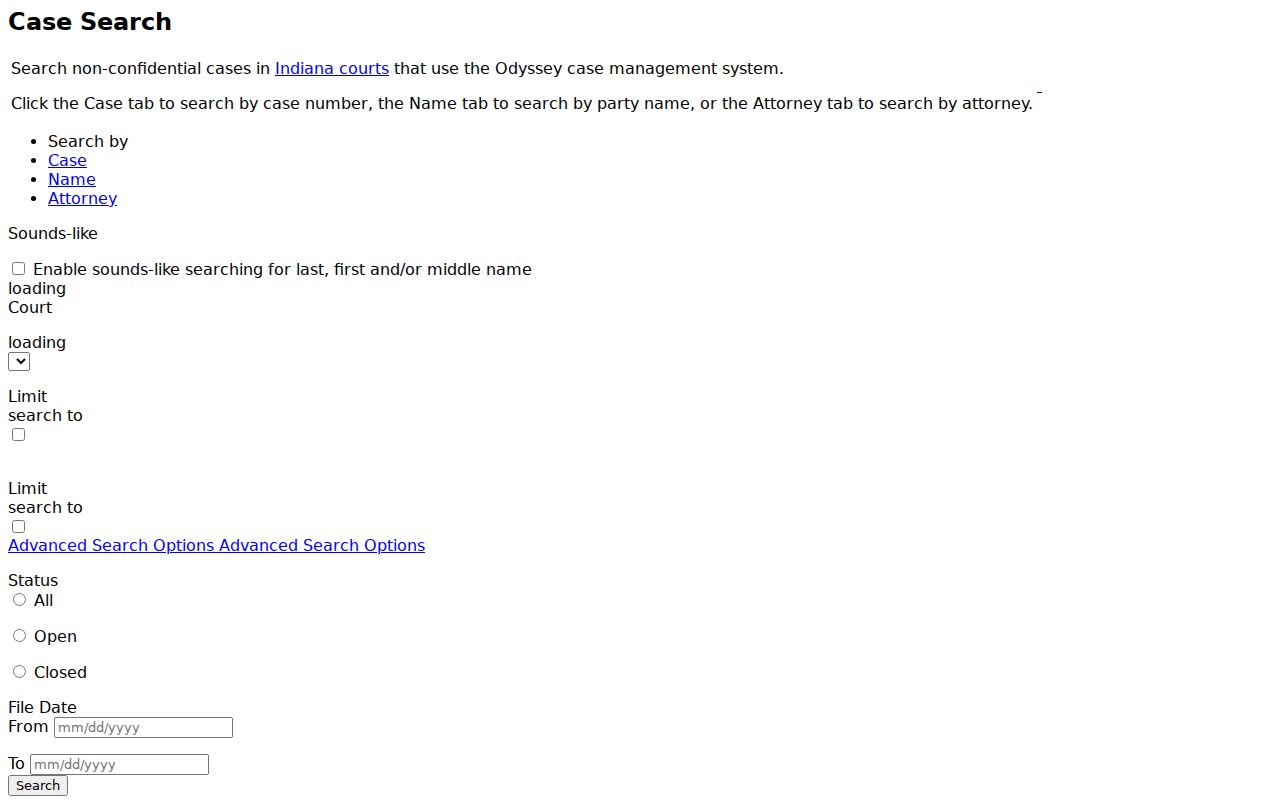
The portal helps locate a public case, while the Clerk remains the source for missing files and certified court copies.
Elkhart Vital Records Have Limits
The Elkhart County Health Department holds county birth and death records from 1882 forward. Current certificates are not an unrestricted residents directory. Indiana requires direct interest, a qualifying relationship, or legal authority. The local office accepts approved online orders through Permitium and also documents counter and application routes. Statewide requests go through the Indiana Department of Health.
As of April 2026, the local certified birth or death fee is $18, while a non-certified copy is $10. The search fee is non-refundable and includes a copy if found. Official Indiana pages conflict on the threshold for some non-family historical birth requests, referring in different places to a deceased person over 75 and to events more than 99 years old. Confirm eligibility with the issuing office before paying.
Review the county's current vital-record instructions before relying on the screen shown here.
The county page is the current source for eligibility, identification, payment, and updated local fees.
Elkhart Voter Records Stay Narrow
Indiana Voters is the official individual registration and election-information portal. The Elkhart County Clerk handles registration questions, corrections, protected flags, and county requests. Public portions may show registration status, residence or mailing information, precinct, districts, and participation history. Participation history does not disclose a ballot choice, and Indiana does not keep a standing party-registration field.
Bulk county data follows a different path through State Form VRG-24 and county policy. Its use agreement bars commercial solicitation and resale outside the stated political uses. Social Security numbers, registration-agency identity, proof-of-citizenship material, ballots, and protected voter details are not ordinary public fields. An inactive status can result from list maintenance and does not by itself mean the person cannot vote.
Check the live Indiana Voters portal before using the captured landing page.
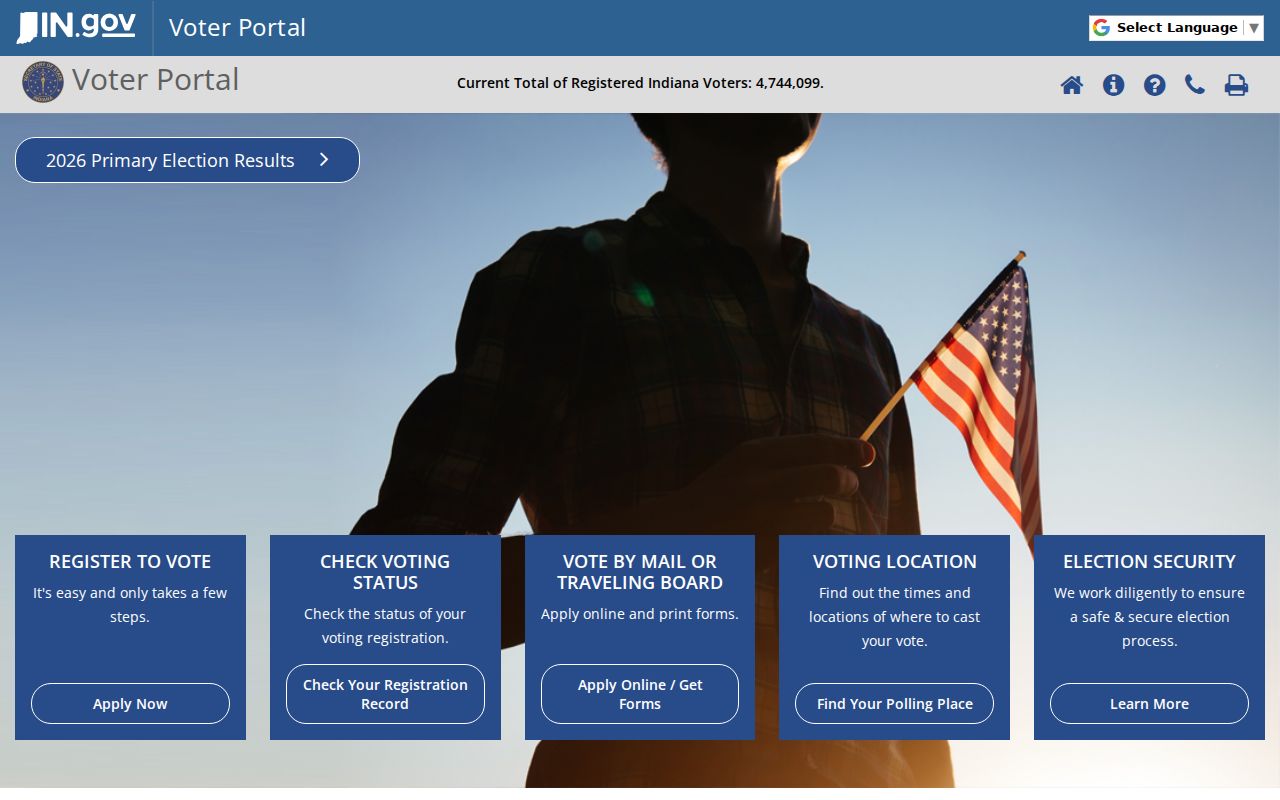
The portal changes with the election cycle, so current fields and dates should always be read on the live state page.
Historical Elkhart County Directories
The printed shelf often succeeds where a current portal fails. Goshen Public Library's Indiana Room identifies city directory runs beginning in 1883 and continuing through listed twentieth-century years, with a 1998-current label. Elkhart Public Library holds directories, obituary and newspaper resources, yearbooks, maps, and local-history material. The Indiana State Library adds county research guides, microfilm, naturalization records, WPA vital indexes, marriages, wills, deeds, and probate material.
A directory entry is a dated clue, not proof of a full household. It may provide a name, spouse or household notation, street address, occupation or business line, volume year, and page. Reverse or criss-cross sections turn the search around by arranging occupants under addresses. The Elkhart County city directory explains the specific shelves and years without inventing the exact Elkhart-city run that the libraries have not published online.
Deeds Reach Back to 1830
Elkhart County was formed in 1830, and State Library microfilm begins with deed volume 1 for 1830 to 1832. Tract books cover 1830 to 1854, while later deed, index, sheriff-deed, tax-title, and probate reels extend the trail. The county seat moved to Goshen in 1831. Courthouses followed in 1833, 1870, and an enlarged 1909 building before modern court consolidation at Reliance Road.
No authoritative source found a courthouse fire or flood that erased the local chain. Missing online records are more likely to reflect a portal cutoff, a converted index, an unindexed packet, or a reel still held in a library. Record both the index citation and reel or packet location. That small habit makes an old residents directory search reproducible and helps staff retrieve the correct book.
Historical key. When EON stops, use the State Library Elkhart microfilm catalog rather than assuming the early deed never existed.
Libraries Reconnect Elkhart Families
Elkhart Public Library genealogy services combine yearbooks, obituaries, newspapers, directories, maps, cemetery books, and a research-request route. The obituary index covers local notices since 1921. Those sources can reconnect relatives or classmates and can add relationships or an address when an official name index stays silent. Goshen Public Library adds census microfilm from 1830 through 1920, Sanborn maps from 1886 through 1926, cemetery records, county histories, plats, and newspapers.
Open the library's genealogy collection page before viewing the captured local-history entry point.
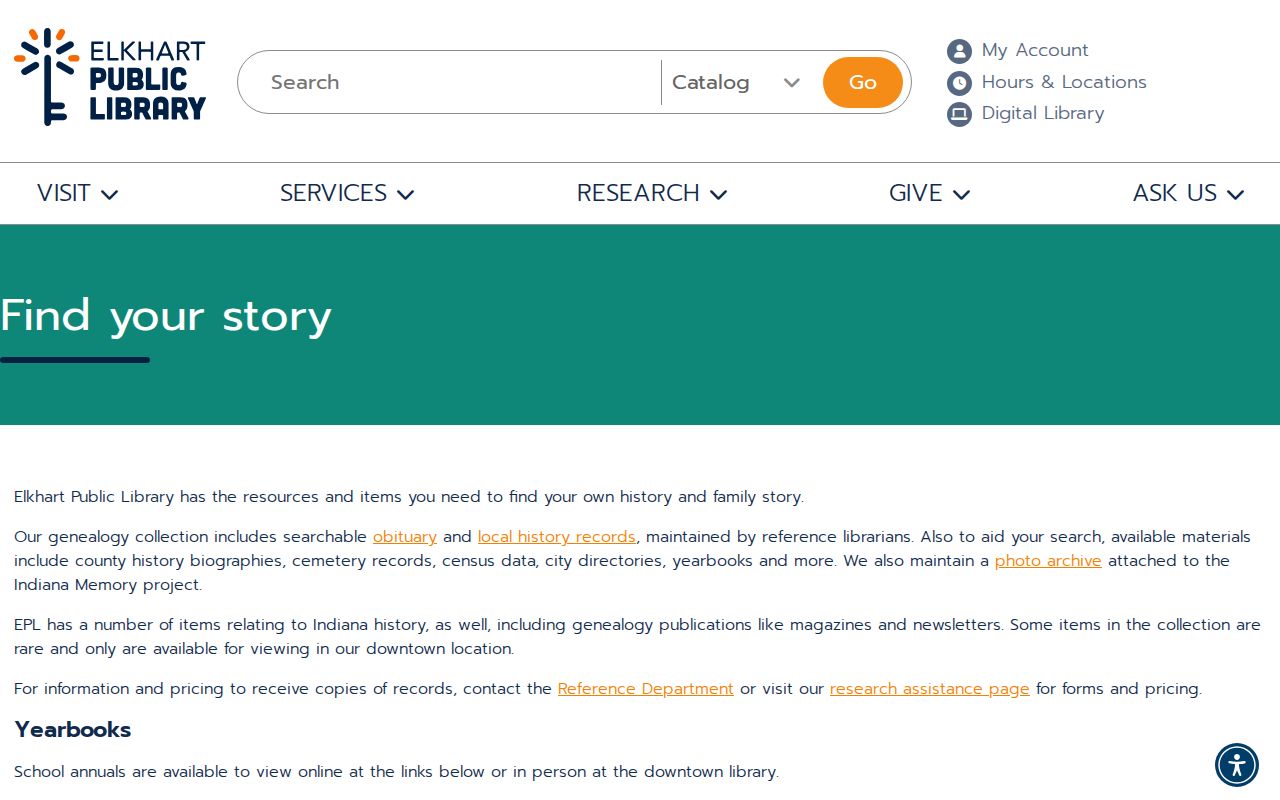
The library can bridge a person's name across a directory year, obituary date, school volume, cemetery source, and historical address.
License Names Are Not Residences
A business or professional record can confirm an affiliation after the main Elkhart County residents directory trail produces a likely person. The Indiana Secretary of State's INBiz search covers entity names, status, addresses, registered agents, and governing or filing roles. The Professional Licensing Agency's free Search and Verify tool supports a person's name, profession, license number, status, county, city, ZIP, and facility or DBA fields. Indiana Unclaimed Property can search by name, city, ZIP, or property ID.
These are useful cross-checks, not proof of a home. A registered-agent address can serve a company, and a license address may be a practice or mailing location. Match the full name, locality, dates, status, and profession to another source. Use the official state portals because private listing services may charge for less current copies of public information.
Open Indiana Search and Verify before comparing its live controls with the captured page.
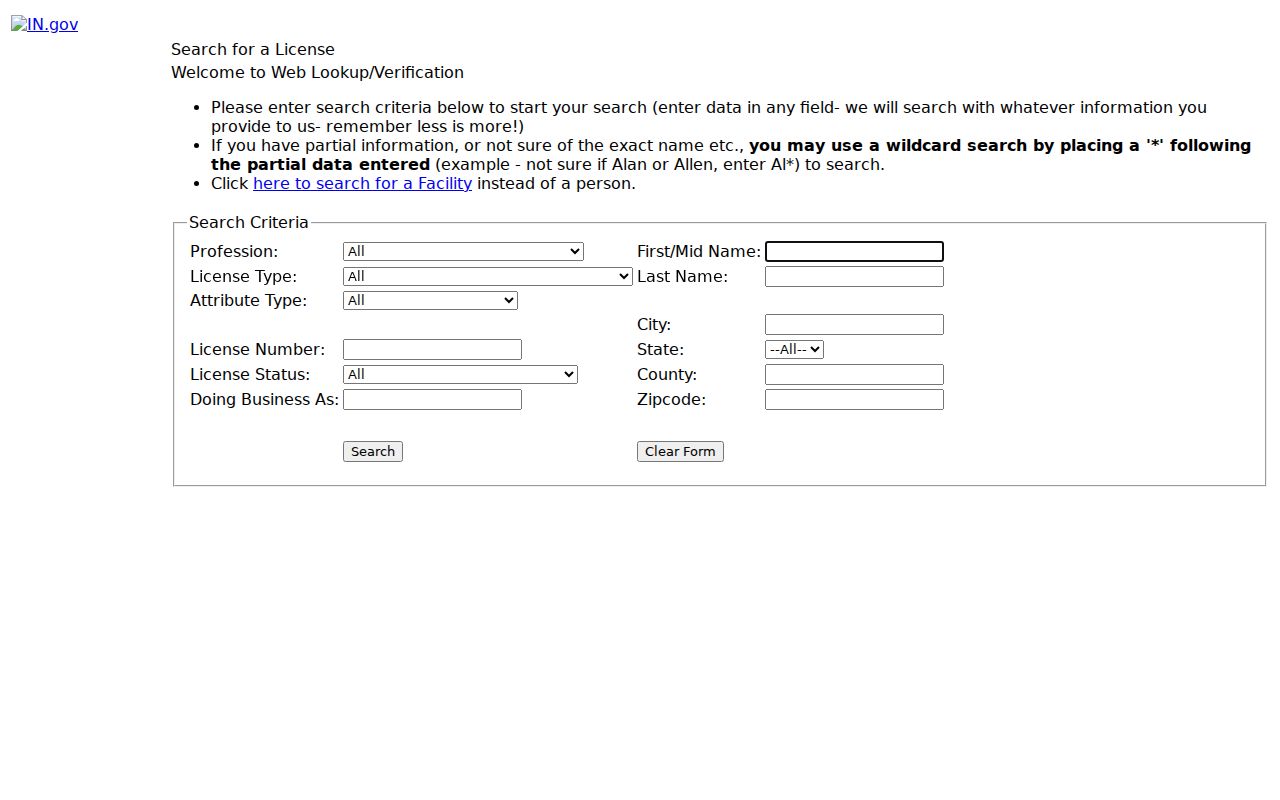
The county, city, ZIP, profession, and license-status filters narrow an identity without turning a professional address into a residence claim.
Elkhart County Spans Many Places
Elkhart County contained 207,047 people in the 2020 census across 463.16 square miles, with a 2025 estimate of 208,774. That scale explains why a countywide name search can return several municipalities and rural townships. The county's official municipality list includes Bristol, Elkhart, Goshen, Middlebury, Millersburg, Nappanee, and Wakarusa. Goshen is the county seat, while Elkhart is the largest city with separate city records.
The Michigan border, rural addressing, and ZIP routes that cross county lines make jurisdiction a core search field. Preserve alternate spellings and diacritics, too. Census QuickFacts reports that 23 percent of residents age five and older spoke a language other than English at home during 2020-2024. A sounds-like court search or spelling variant can resolve a missed name, but it still needs a second identifying fact.
When Elkhart Portals Fail
A blank screen or no-result message is not the end of an Elkhart County residents directory search. Dynamic portals may block automation, change controls, or omit older material. Try spelling variants and narrower dates first. Then move to the office's public terminal, request a known document by recording or case number, call the Clerk or Recorder, or ask a library to check an offline volume.
Indiana's Access to Public Records Act, IC 5-14-3, supplies the request route for an existing public record. Describe the agency, record type, name, address or parcel, date range, and desired format with reasonable particularity. A written request must receive a response within seven days under the statute, but that is an acknowledgment rule, not a promise that production will finish in seven days. Confidential records and statutory redactions remain protected.
Note: Keep a search log with the portal, date, spelling, filters, result number, source link, and any access limit.