
Elkhart County Previous Resident Sources
The strongest backward trail starts with the newest parcel record and changes source as the dates get older. Beacon supplies the current parcel and owner. Recorder instruments carry the title chain back through grantors and grantees. State Library microfilm reaches the county's first deed volumes. For occupants rather than owners, Goshen directories, Elkhart library holdings, census schedules, newspapers, and cemetery files fill different periods.
| Source | Years It Covers | Where Held | What It Shows |
|---|---|---|---|
| Recorder deed index and books | 1830-forward; online cutoff not published | Recorder, EON/Laredo, public computers | Owners, transfers, legal descriptions |
| Goshen city directories | Selected runs, 1883-1997 | Goshen Public Library | Address and occupant clues in Goshen |
| Elkhart/Goshen directories | 1998-current library label | Goshen Public Library | Recent address bridge; city split needs staff check |
| Federal census | 1830-1920 local film; federal through 1950 | Goshen Library and NARA partners | Household, age, birthplace, and address details |
| Sanborn maps | Goshen, 1886-1926 | Goshen Library and Library of Congress | Streets, lots, footprints, and uses |
| Building permits | 2017-2022 exports; Jan. 2023-current | County Planning and Development | Work dates and alteration clues |
For a recent transfer, use the parcel card and Recorder. For an early twentieth-century occupant, pair directories with census and maps. For the nineteenth century, deeds, tract books, probate, plats, and census schedules become more important.
Fix the Elkhart County Parcel
Open the Elkhart County Beacon search and save the property situs, parcel number, current owner, separate mailing address, legal description, subdivision or lot, last transfer details, and parcel map. Situs means the physical property location. The mailing address is where the tax notice goes and does not prove that the owner lives at the parcel.
Beacon's official guide says a map parcel click can open the Property Record Card. That card preserves stable parcel and legal clues before a search for previous residents begins. If a street number later changes, subdivision, lot, section, and legal description can still tie the records together.
Key step. Save the parcel card before searching deeds, since names and street labels are less stable than the legal land description.
Trace Elkhart County Past Owners
The Elkhart County Recorder preserves land instruments and provides Tapestry EON, Laredo, public-computer, copy, and counter channels. The county does not publish the earliest online index year. Treat the search as two parts: use the online index where available, then ask the Recorder or consult State Library microfilm for older books.
- Copy the current owner's name, parcel number, legal description, and transfer reference from Beacon.
- Find that owner's purchase deed in Tapestry EON or at a Recorder public computer. Record the document number, date, book and page, seller, and description.
- Search the seller as a prior buyer. Confirm the same legal description before accepting the match.
- Repeat backward. Search trusts, estates, trustees, mortgages, releases, affidavits, and plats when a surname chain breaks.
- Move to deed books and the State Library microfilm list when the online index no longer reaches the date.
- Grantor / grantee
- The grantor transfers an interest; the grantee receives it.
- Chain of title
- The linked sequence of transfers for the same land.
- Legal description
- The lot, subdivision, section, tract, or boundary description that can survive a street-number change.
A deed identifies title parties, not every occupant. Keep an owner timeline separate from the household timeline.
Elkhart County Deeds Reach 1830
Elkhart County's first identified deed volume covers 1830-1832. The microfilm sequence continues through nineteenth-century deed records, with deed index L-5 covering 1894-1902. Separate sets include tract books for 1830-1854, tax-title deeds for 1863-1907, and sheriff deeds for 1872-1915.
These sets explain events absent from an ordinary sale. A tract book follows land before modern parcel IDs. Tax-title and sheriff deeds may mark forced title changes. Record both the index citation and reel or packet location, since some probate packets are hard to index, unfilmed, or mapped differently between local and State Library systems.
Map Elkhart County Past Addresses
Goshen Public Library lists Sanborn fire-insurance maps from 1886 through 1926. A verified 1917 Goshen Sanborn set has 17 sheets. The maps show street names, building footprints, construction or use details, and lot relationships. They do not name all residents.
Compare the old block shape with the present parcel and legal description. Adjacent structures can help when a duplex notation or changed number shifts the apparent address. County Planning permit exports add recent construction and alteration dates. Older permits, inspection cards, and plan files require a focused records request with the address and date span.
Elkhart County House History Help
There is no separate official county house-history guide. The practical fallback is library reference help, the Recorder, the Surveyor, and the county museum. Elkhart County Historical Museum in Bristol has a research library and archives; appointments are recommended.
The museum source below shows the public research and collection route.
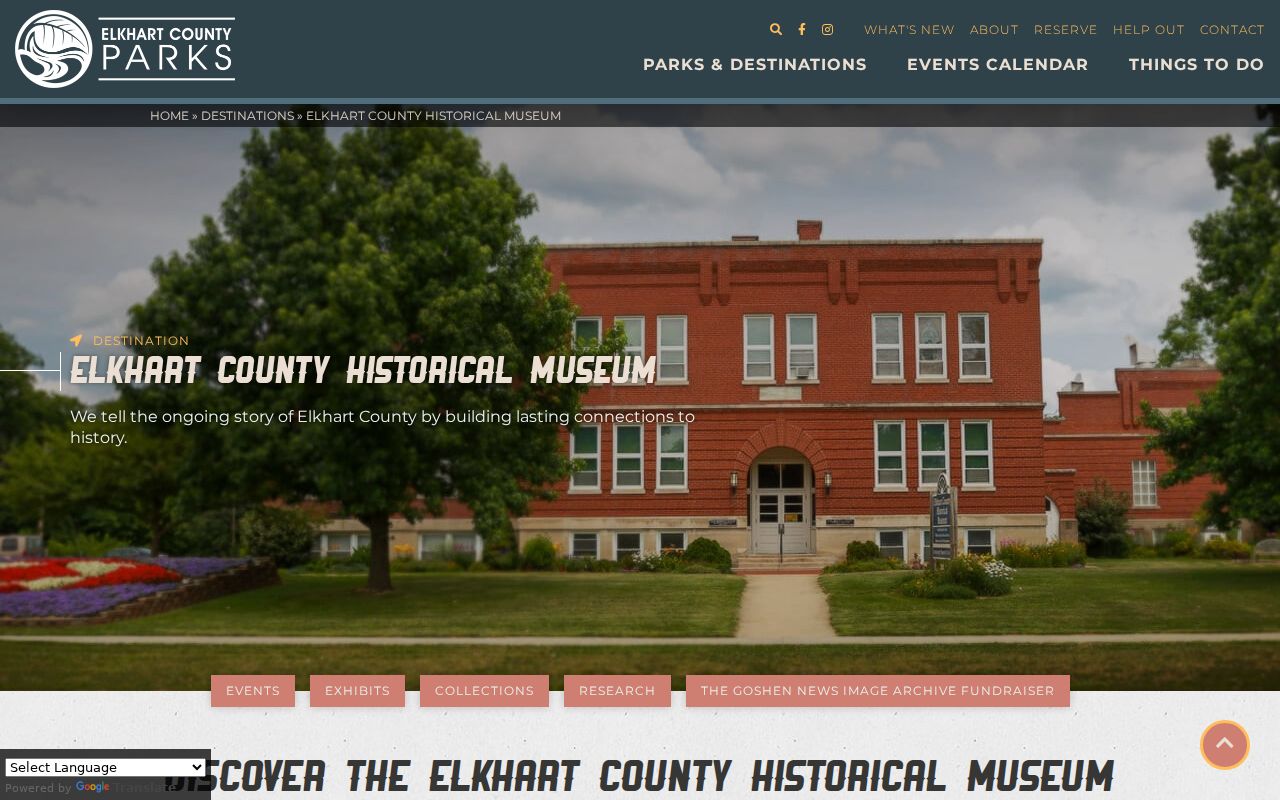
Ask with an address, owner or occupant name, town, and date range. Photos, maps, manuscripts, business material, and newspaper files may place a past resident in context.
Census Gaps for Elkhart County Residents
Goshen Library holds county census microfilm from 1830 through 1920. National Archives census access reaches 1950 under the 72-year release rule. From 1850 onward, schedules can show names, ages, birthplaces, family links, work, and sometimes street addresses. Earlier schedules usually name only the head of household.
The federal census screen below explains the public release sequence.
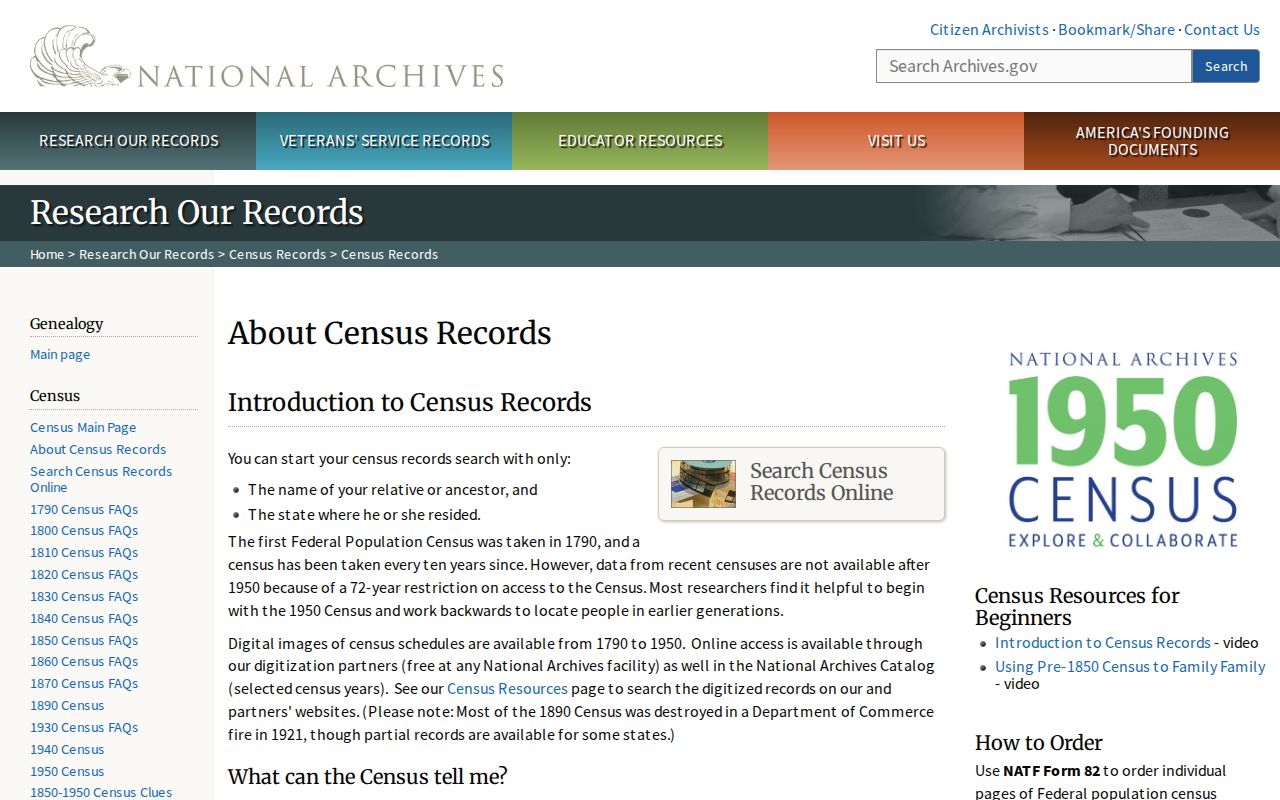
Most 1890 schedules were destroyed in a 1921 fire. Bridge that gap with the 1890 Goshen directory, deeds, maps, probate, newspapers, and nearby directory years.
Elkhart County Past Household Trail
Owners are only one part of address history. Directories and census schedules can identify people who occupied a place without holding title. Collection years and reading rules appear on the Elkhart County city directory page. Goshen's run is specific; EPL confirms Elkhart volumes but does not list the complete Elkhart sequence online.
Build a household timeline in small steps:
- Search an address section when a volume has reverse order, then record all listed occupants.
- Check each occupant in the name section for spouse, work, and alternate address clues.
- Pair the nearest directory with a census year, allowing for different spellings and street formats.
- Test disappearance with an obituary, cemetery record, probate file, deed, or newspaper notice.
Elkhart's cemetery search covers the city cemetery system, while EPL lists cemetery books and funeral-home records. Historical burial-permit rules once called for late residence and next-of-kin details.
The city cemetery page below provides the current grave-search channel.
Cemetery evidence can confirm death and burial context, but match it to the original register, obituary, or certificate when available.
Lawful use. Research previous residents for family history, property history, or personal curiosity. Never use a record to stalk, harass, threaten, or track a living person.
Close Elkhart County Resident Gaps
When title passes through an estate, search the Clerk's probate file, State Library probate indexes, obituaries, cemetery books, and funeral-home publications. Heirs, fiduciaries, wills, and court orders can connect a former owner to the next deed. Some packets are unindexed or were not filmed, so the Clerk counter and archive remain important access channels.
Certified birth and death records have access limits. The Indiana vital records ordering page provides statewide mail, phone, and online routes, while the county Health Department handles local events. Eligibility rules for current records must be checked before ordering.
The state page below shows the official certificate channels.
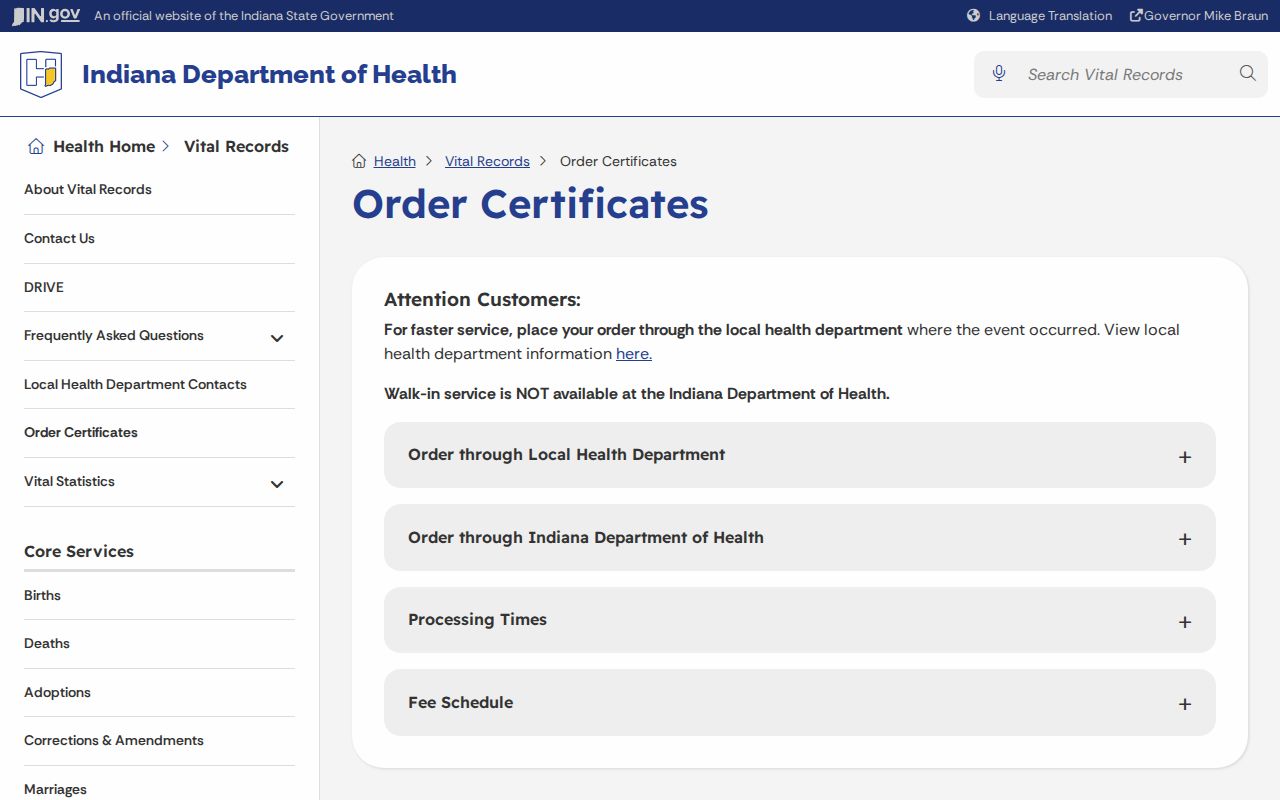
A certificate search works best after directory, deed, census, or obituary evidence has narrowed the person and event.